???????
Know Your Passion and Skills
If you have already identified your skills and passion, it’s good. However, if you haven’t, it’s time to create a list of your top interests. It could be something you love to do in your free time. Think about which areas you have experience or skills in and make a list of your interests and passion areas.
Is there anything people often tell you are good at? What skills have you developed through your work? Which area are you the most knowledgeable about? You don’t have to find a perfect fit. Just stick with such an aspect of running a business that you are interested in. It would be the best niche for you. Also, keep in mind that businesses aren’t easy, and they will test you. So, if you are working in an area that you don’t like or care about, you may get bored and end up quitting. This is more likely to happen if you are a first-time business owner and hardly know the pain points of business.
However, this doesn’t mean you need to be perfectly fit to adjust to the business world. If you follow your passion and have a zeal for running the business you like, you will stick to it. Here’s how you can determine your passion:
- How much time do you want to invest in your business? What do you do looking forward to meeting high-end goals?
- What books or magazines do you read or follow? What are the things that interest you?
- Which clubs or organizations do you belong to?
Figure Out What Customer Problems You Can Solve
Now that you have listed your passion and skills, the next step is to think if there is a market for your niche. You should ensure that there is a need for it, or your business may not be able to grow. You can use tools like Google Keyword Planner to figure out the scope of the market.
After you have figured out the niche scope, the next thing is to find out what customer pain points can boost your niche and are you able to solve them. Below is what you can do-
- Create a questionnaire and have a conversation with your target customers. You can also conduct a survey.
- Research the forums related to your niche to know the problems faced by your target customers.
- Leverage tools like Google Keyword Planner to decide the right keyword combinations for your niche. This will help you find the popular search terms.
Know Your Competition
If you have competition in your niche, it is a good sign. But, a deep analysis is required to research thoroughly about the competition. One trick is to use a keyword research tool on the competitors’ sites and find out if there is a scope of the profitable market in your niche.
When there are many popular websites for a selected keyword or phrase, it indicates that the niche is oversaturated. If no website ranks for a keyword, it means there is no market for the niche. Go for the niche with a high search rate and a little competition to find a sustainable, profitable market. Here are few areas you need to focus to identify what your competitors are doing:
- Quality Content: It’s very easy to outrank other businesses if you are offering good quality content in the niche.
- Transparency: Creating an authentic and transparent presence is one of the most important things; you can focus on it to outgrown your competitor.
- Paid competition: if you have a keyword that has high volume and low competition and low paid volume, you can outgrow the market bidding on that.
Find Out What You Can Earn From the Niche
At this step, you might have found the right niche for you. The next step is to do some research on how much budget you would need to invest into the niche and what returns you can expect. For example, with keyword research, you can have a look at the top products offered by competitors that are similar to yours.
If you have a product that can address the customers’ pain points and provide you with a good market, focus on improving its features. Furthermore, if there is a similar product in the market, compare the price too. This way, you can decide on a competitive price for your product.
Put Your Niche into Action
Now that you have chosen a niche that suits you the best, the next step is to test it. Start with creating a landing page to provide all the information about your niche. As you are starting your journey, you can use paid advertising to spread your brand awareness.
The traffic you get on your site will give you an idea of how much the customers are interested in your brand. If you don’t get enough traffic or pre-sales, it might be due to some issues with the landing page. At this stage, you can do a survey on your market using guest posts, social media, etc.
Once you gather this information, you will feel confident about your niche. Then, you can create a website, social media profile, blog, etc.
Benefits of Using Pareto Analysis
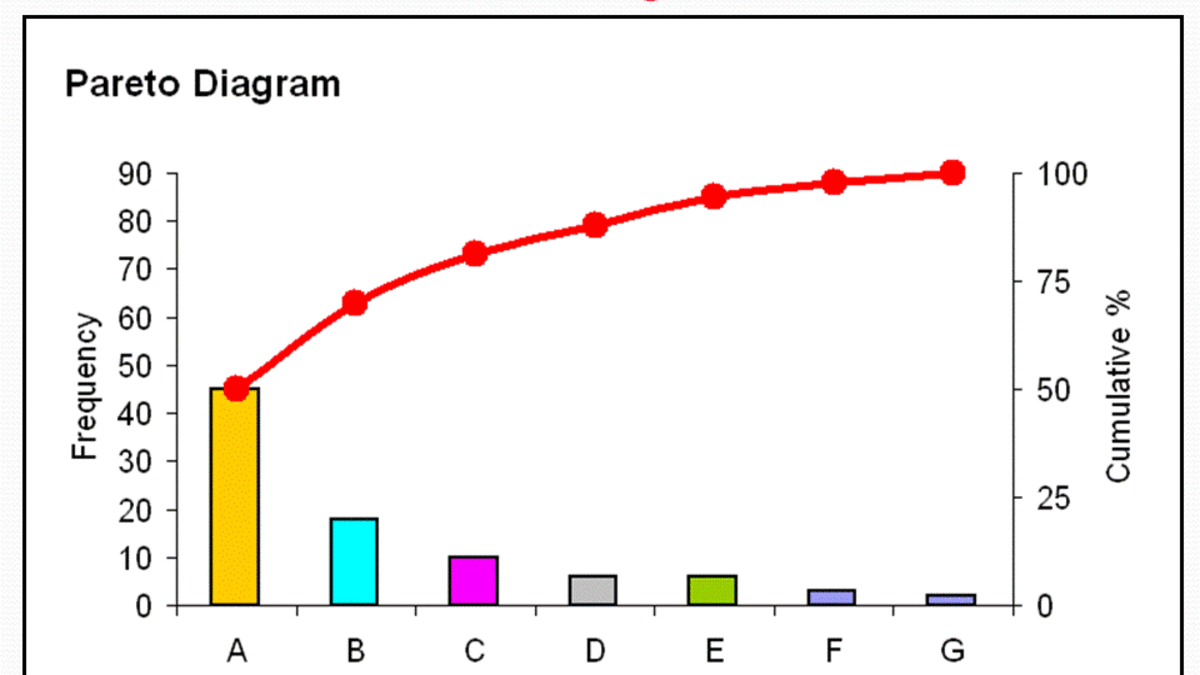
Pareto analysis has far-reaching implications for small and medium-sized businesses (SMBs), although the idea behind it is simple but profound: 80 percent of results come from 20 percent of efforts.
The beginning of Pareto analysis is interesting. The powerful concept of digital marketing has its roots in Italy. An Italian economist Wilfredo Pareto (1848-1924), discovered that about 80% of the wealth of his native country was in the hands of 20% of the population.
Conclusion
This is a five-step formula that comes in handy when you are struggling to find the right niche for you. It will provide you with a good place to start your search and give wings to your ideas. Also, it will save you a lot of time as you know the right strategy to find a suitable niche. So, get started with these five steps to finding a niche with a profitable market that will be worthwhile.