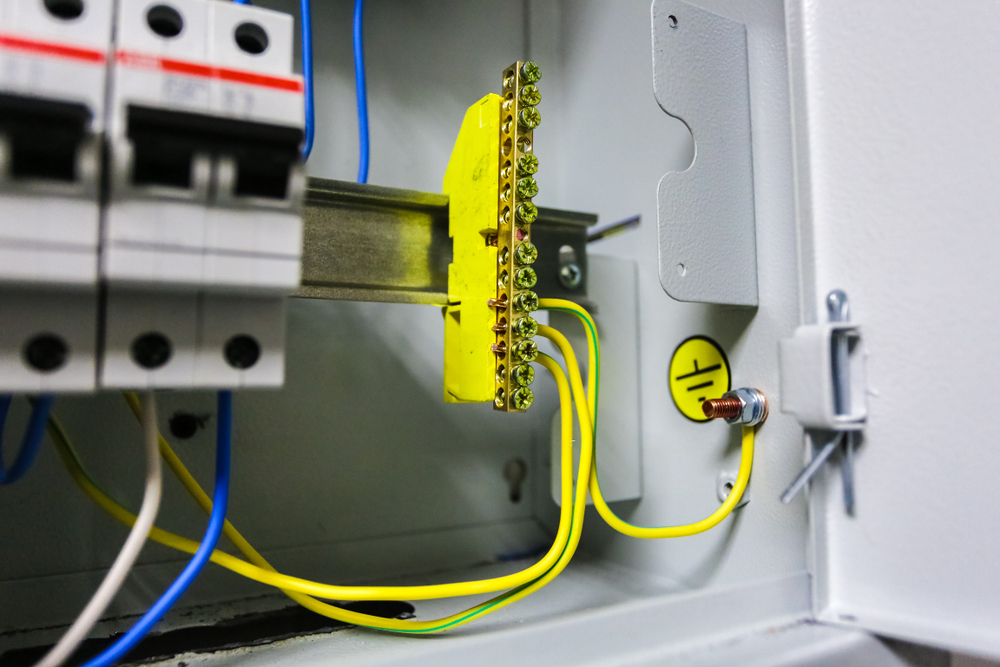
Humans have made truly remarkable discoveries in the field of electricity, and an extremely important lesson has been the importance of grounding electrical currents. Electricity has provided countless benefits to people, but it remains one of the deadliest elements in our everyday lives. Unless your electrical systems are already grounded, you're taking a pretty big risk by not doing so.
In an electrical circuit, there is what is known as a live wire, which supplies the power, and a neutral wire, which carries that current back. An additional " ground wire " can be connected to electrical outlets and other electrical devices and can also be safely connected to the ground in the switch box. This ground wire is an additional route for electrical current to safely return to the ground without danger to anyone in the event of a short circuit. If a short were to occur, current would flow through the ground wire, causing a blown fuse or tripped circuit breaker, a much more preferable result than the fatal shock that could occur if the current was not grounded.
THE IMPORTANCE OF GROUNDING ELECTRICITY
These are 5 reasons why electrical currents to ground are so important.
1. Protection against electrical overload
One of the most important reasons for grounding electrical currents is that it protects your appliances, your home, and everyone who is exposed to electrical surges. If lightning were to strike or the power were to go up for whatever reason, this produces dangerously high current spikes in your system. If your electrical system is grounded, all that excess electricity will go to the ground, rather than frying everything that is connected to your system.
2. Helps direct electricity
Having your electrical system grounded means that it will make it easier for power to go directly to where you need it, allowing electrical currents to travel safely and efficiently through your electrical system.
3. Stabilizes voltage levels
A grounded electrical system also makes it easy to distribute the amount of power to all the right places, which can play an important role in helping to ensure that circuits are not overloaded or burned out. Ground provides a common reference point for the many voltage sources in an electrical system.
4. Earth is the best conductor
One of the reasons that grounding helps keep you safe is because ground is a great conductor and because excess electricity will always take the path of least resistance. By grounding your electrical system, you are giving it a place to go other than yourself and possibly saving your life.
5. Prevents damage, injury and death
Without a properly grounded electrical system, you are risking any appliance you have plugged into the system burning out beyond repair. In the worst case, a power surge can even start a fire, causing not only loss of property but also physical injury.
HOW DOES GROUNDING WORK?
It's clear that electrical ground work is a smart move, but how does it work?
In most homes, the wiring system is permanently grounded to a metal bar driven into the ground or a metal pipe that extends into the home from a groundwater supply system. A copper conductor connects the tubing or rod to a set of terminals for ground connections on the service panel. For wiring systems that use a metal-covered electrical cable, the metal generally serves as the ground conductor between the wall outlet and the service panel.
In cabling systems using plastic sheathed wire, an additional wire is used for grounding. Since electricity is always looking for the shortest path back to earth, if there is a problem where the neutral wire is broken or interrupted, the ground wire provides a direct route to the ground. Through this direct physical connection, ground acts as a path of least resistance, preventing a person from becoming the shortest path and suffering a serious electrical shock.
circuit breaker maintenance India