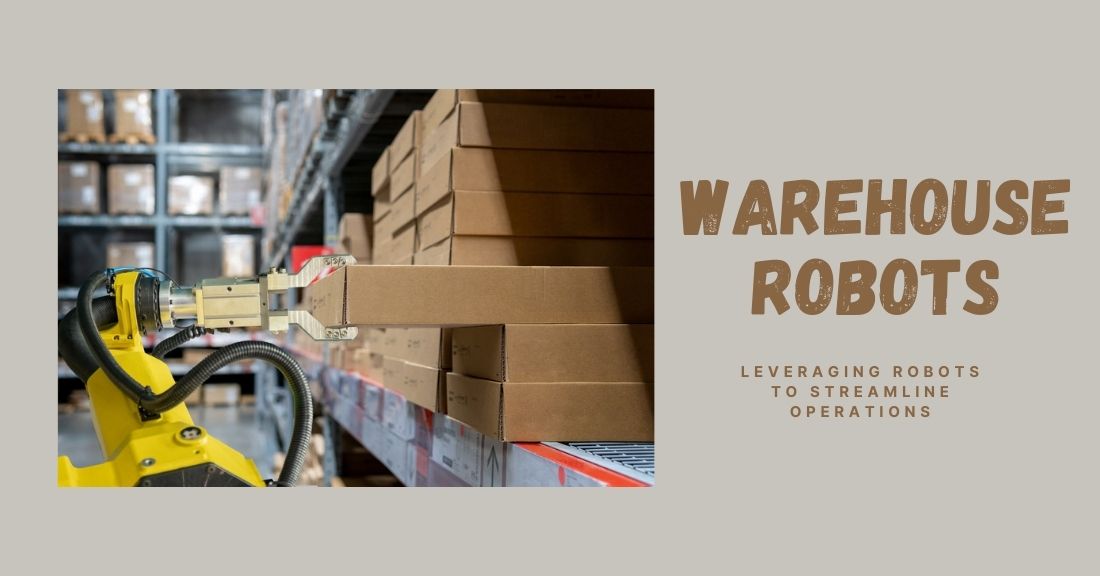
Without any doubt, the advent of technology that assists employees or handles end-to-end tasks, which is typically categorized as warehouse automation, is very prominent in this tech-oriented world. Warehouse operations are known for their large number of complex processes, distribution of goods, and inventory management. Thanks to the latest technological innovations and advancements, which have brought warehouse automation and material handling equipment from hype to mainstream.
Let’s lay our eyes on some astonishing statistics.
87% of the industry decision-makers are planning or in the process of expanding their warehouses by the year 2024. On the other hand, utilization of automated guide vehicles (AGVs) in 2021 held steady from 2020, with 6% using presently and 14% still evaluating/ considering. Furthermore, the global warehouse automation market is estimated to surpass the figure of 30 billion US dollars by the year 2026.
Now, let’s glide right into different robotic technologies that have literally revamped this modern world’s warehouses.
Robotic Arms
The robotic arm is something that is not new in the manufacturing industry. It has been around in distribution environments and warehouses for years. Technological innovations and advancements in vision systems and end effector (gripper) are offering better good picking applications. Moreover, betterment in pick and put operations are also observed with the passage of time.
Collaborative Robots
The primary benefit of collaborative robots (cobots) is reducing the travel of pickers working collaboratively with the warehouse workers. Pickers spend most of their time walking and these bots decrease some of the waste walkings, resulting in decreased productivity. Following are the two primary types of collaborative robots:
- Follow-me bots
- Meet-me bots
Mobile Rack Goods-To-Person (GTP) AMR
Mobile rack GTP AMRs bring inventory through mobile racks systems to workstations optimized for productivity. Such come-to-me bots offer tremendous flexibility with how products are stored than other goods-to-person (GTP) solutions.
Here are the key challenges associated with GTP autonomous mobile robots (AMRs).
- Cube utilization: These types of processes and robots make poor utilization of building cubes. The use of mechanical lifts and structural mezzanines could counter this issue but add operational issues and investment requirements.
- Productivity: The goods-to-person (GTP) workstation yields a lower productivity rate than other GTP technologies. An operator picking out of a tote (in a shuttle GTP) is very productive compared to others picking out of the rack.
Roaming Shuttle AMRs
Roaming shuttle AMRs (autonomous mobile robots) are used in warehouses to store and transport goods in a high-density storage and retrieval environment, typically part of a GTP solution. The main benefit of these autonomous mobile robots is that they permit users to scale storage and throughput relatively independently.
Unit Load Transport Autonomous Mobile Robots
Unit load transport AMRs are manufactured to address the two fundamental limitations of the AGVs that have been deployed for the past couple of years. The first limitation of AGVs is to be deployed in areas when AGVs are given priority safely.
Bot Sorter AMRs
Bot sorter eliminates the requirement of fixed in place, traditional sorters. The prices of such bots increase as sorting operations' complexity increases.
Following are the limitations of bot sorter autonomous mobile robots (AMRs):
- Throughput: These robots are only suitable for small to medium businesses and can justify low to medium throughput applications. A traditional sorter, even with its restrictions, will offer a significant benefit for high throughput applications.
- Cube utilization: These robots require a dedicated room or floor space to operate appropriately.
Other Applications of Robots in Warehouses
The fact cannot be neglected that ergonomic conditions are poor and result in injury. Thanks to the technological innovations and advancements due to which exoskeletons and truck loaders came into existence. But these solutions are not cost-justified. Truck loading and unloading automated guided vehicles (AGVs) are usually challenged when there is wide variation in product to handle. Furthermore, these solutions typically have less throughput as compared to manual processes. Also, these solutions require a larger staging area in comparison to manual processes. However, businesses are still investing in such robust solutions to boost their profitability and streamline their business operations.
Conclusion
Lack of flexibility, effectiveness and cost are sometimes considered as reasons for not deploying robots most often. The fact cannot be neglected that warehouse automation and robots require a larger initial investment over analogous human-based operations. Moreover, robots that lack humans’ critical thinking and analytical capabilities are still not as effective as human operations. In a nutshell, robots have surpassed other warehouse automated solutions and controls. Hence, in the approaching years, robots are not going to replace humans, but they will lend a helping hand to human workers that will result in lead generations for a business.
Are you one of those who struggle to find an effective solution provider for your warehouse? Well, here’s a solution for you. McCombs-Wall Inc. Engineering has everything that you need for your warehouse. They offer ideal, forward-thinking, and innovative material handling solutions all across the United States of America. They offer industry-leading technologies and services across a broad range of industries such as third-party logistics(3PLS), food providers, retails, aerospace, and more. In addition, they constantly strive to exceed the expectations of their potential customers. On top of that, they offer a comprehensive range of material handling equipment and professional services, including capital equipment justification, financing, consulting, and a lot more.
Conveyor systems
- Package and tote handling
- Parcel and mail handling
- Manufacturing and assembly
- Food and beverage
- Cross-docking
- Pallet and drum handling
- Downlines and chutes
- Trailer loading and unloading
- Spiral conveyors and vertical lifts
Sortation systems
- Sliding shoe sorters
- Narrow belt sorters
- Pop-up wheel sorters
- Tilt tray or Cross Belt
- Carton flow or pallet flow
- Viper sorter or sweep sorter
Goods to Person
Order fulfillment
- Voice directed picking
- Pick to light
- Order carousels
- Goods to person
- Automated picking
- Zone routing
- End of line automation
- In motion scale manifesting
- Print and apply applications
- Carton forming and induction
- Packing and sealing
- Palletizing/stretch wrapping
- Custom application
Following are the partner companies to which they resell and integrates with:
- Lightning Pack
- Knapp
- Kindred
- SI Systems A-Frames
- Hannibal
- Hanel
- Modsort(Regal Beloit)
- ID technologies
- Intralox
- TGW
- Interroll
- Intelligrated Honeywell
- Effimat
- OPEX
- Gray Orange
- Hytrol
Moreover, here are the technology companies MWI do not resells but usually integrates with:
- SICK
- Beckhoff
- FANUC
- Cognex
- BestPack
- Rockwell Automation