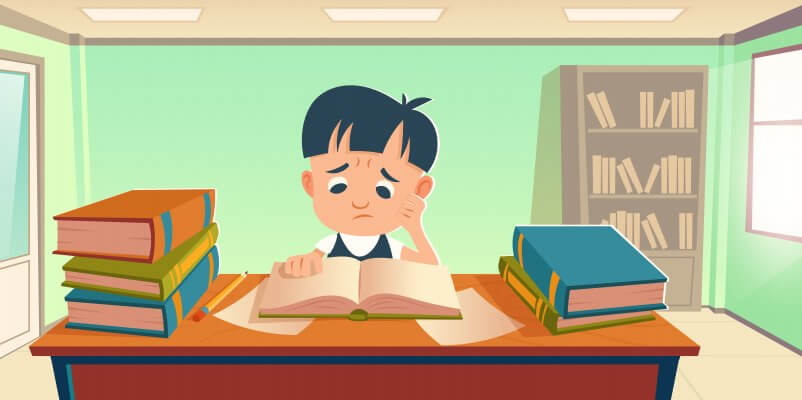
In order to answer the above question let's first understand what depression entails in a student and who are Academic Counsellors?
Students with Depression
Today, students are arriving at school and colleges with greater needs, pressures and distractions. One issue that has become more prevalent in recent years is childhood and adolescent depression. Depression can have harsh and lasting consequences for students. It can lead to setbacks in a student’s social life, emotional growth and performance in school and college, as well as substance abuse. Also, it is well-known that depressed students are at high risk for suicide.
A lot of factors may contribute to a student’s depression, such as economic issues, genetic issues, inadequate nutrition and exercise, bullying, lack of family interaction/support, exposure to social media sites too early and also academic stress. Depression hits students in so many different ways, and students often don’t recognize their feelings of loneliness, inadequacy and regret. The symptoms of depression in children vary. It often gets undiagnosed and untreated because the symptoms can be passed off as normal emotional and psychological changes that occur during growth years. The prominent symptoms of depression revolve around a feeling of sadness, hopelessness and mood changes.
Indicators and symptoms of depression in children include:
• Irritability or anger
• Continuous feelings of sadness and hopelessness
• Social withdrawal
• Increased sensitivity to rejection
• Appetite changes, either increased or decreased appetite
• Changes in sleep, sleeplessness or excessive sleep
• Vocal outbursts of crying
• Difficulty concentrating
• Fatigue and low energy
• Physical complaints such as stomach aches, headaches which don’t get better by treatment
• Reduced ability to perform during events and activities at home or in school
• Feelings of worthlessness or guilt
• Impaired thinking or concentration
• Thoughts of death or suicide
Academic Counsellors
Academic counsellors support students in recognizing and achieving their educational goals. Responsibilities of an academic counsellor include providing educational guidance and enablement for students by recommending courses and determining appropriate education solutions for different types of students. They also follow through and track the progress of students. The Academic counsellor also provides assistance for at-risk students.
Academic counsellors help students find the academic path that fits their natural abilities, aptitude and interests. The counsellor offers advice, provides information, and helps assess a student's academic track to equip them in finding employment after graduation. The academic counsellor is expected to assess whether outside factors which can be anything from a need for corrective eyewear to distractions at home or depression that may negatively impact the student's expected achievement plan and offer suggested strategies to help improve these problems.
 How Academic Counsellors Help Depressed Students?
As the academic counsellors work closely with students to work on their academic and career plans, they may identify and understand the personality and change in behaviour of their students before it gets noticed by anyone else including parents and teachers. They notice a loss of interest in school and poor academic performance or a change in appearance.
Counselling can be effective in helping a child with depression navigate the social, behavioural and academic demands of the school setting. Trust in counsellor offers to maintain academic engagement and success and help in answering the questions the students ask, such as: Why am I different? Do people know? Why do I do things that I don’t mean to do? Is school a place where I am safe or not?
Depression gets complex, specifically when it co-exists with other emotional and behavioural problems. Often it is because of family problems, making a difficult situation even more challenging. The good news is that, with proper intervention and care, most children and youth can learn to address their depression and lead happy and productive lives. In some cases, medication and therapy may be needed. Although a student may need outside therapy, there are many things academic counsellors and teachers can do to help the depressed student.
• Develop a relationship: Develop a working, collaborative relationship with the student with depression. Do not be afraid to talk with the student about their fears. Most of the times, depressed students are seeking someone who cares about them, although it might not seem that way. Above all, don’t give up on them.
• Use positive approaches: Remember that these students are not choosing to be depressed. They also want to feel better and do well just like everyone else. When they are depressed, they lack the personal resources to do their best work even after putting in the efforts. Students with depression require extra support and care and not criticism, punishment or indifference. Consider ways to give them that extra support and attention they need, while recognizing that the student may be putting the best effort he or she can at the time.
• Provide opportunities for success: Try your best as an academic counsellor to arrange experiences so the student can be successful and be recognized for those successes. It is important for students with depression to feel accepted as a part of the school and that educators believe in the students’ competence. Academic counsellors can help teachers to understand the needs of the depressed student and the causes behind the behaviour to provide appropriate opportunities.
Hence academic counsellors are the key in the school and college environment. They advocate, counsel and collaborate by working as enablers in assisting students, parents, teachers, administrators and other school personnel in learning about depression and implementing methods to help make the difference for a student between success and failure or underachievement. They can have a significantly positive impact on improving the academic, social and emotional development of students with depression.
Author Details:
Author Name - Deepti Arora
Occupation - Owner and DMIT Expert at Disha Deepan.
Website Link - https://dishadeepan.com/
Email - deepti@dishadeepan.com
About the Author - Deepti Arora is a very experienced DMIT expert at Disha Deepan. She provides expert counselling for career, parenting, academics, corporates, partner compatibility, stress management, and lifestyle management based upon the biometric analysis of an individual