They say that when children speak two languages from an early age, they have many advantages over children who speak one language all their lives. However, raising a bilingual child is not easy.
Bilingualism is knowledge of two languages. It is not so important why you decide to raise a bilingual offspring, the child will only benefit from this.
Bilingualism has so many benefits, which are confirmed by so many researches. Bilingualism is much more than just two languages. First, bilingual children communicate faster with other people, learn about different cultures with more love and joy than children who speak only one language.
Bilingual kids are able to notice incorrect grammatical rules. They have at least two words for each subject. A bilingual child constantly switches between languages. Thanks to this, bilinguals are better aware of the connection between letters and sounds, and they make talented writers and journalists.
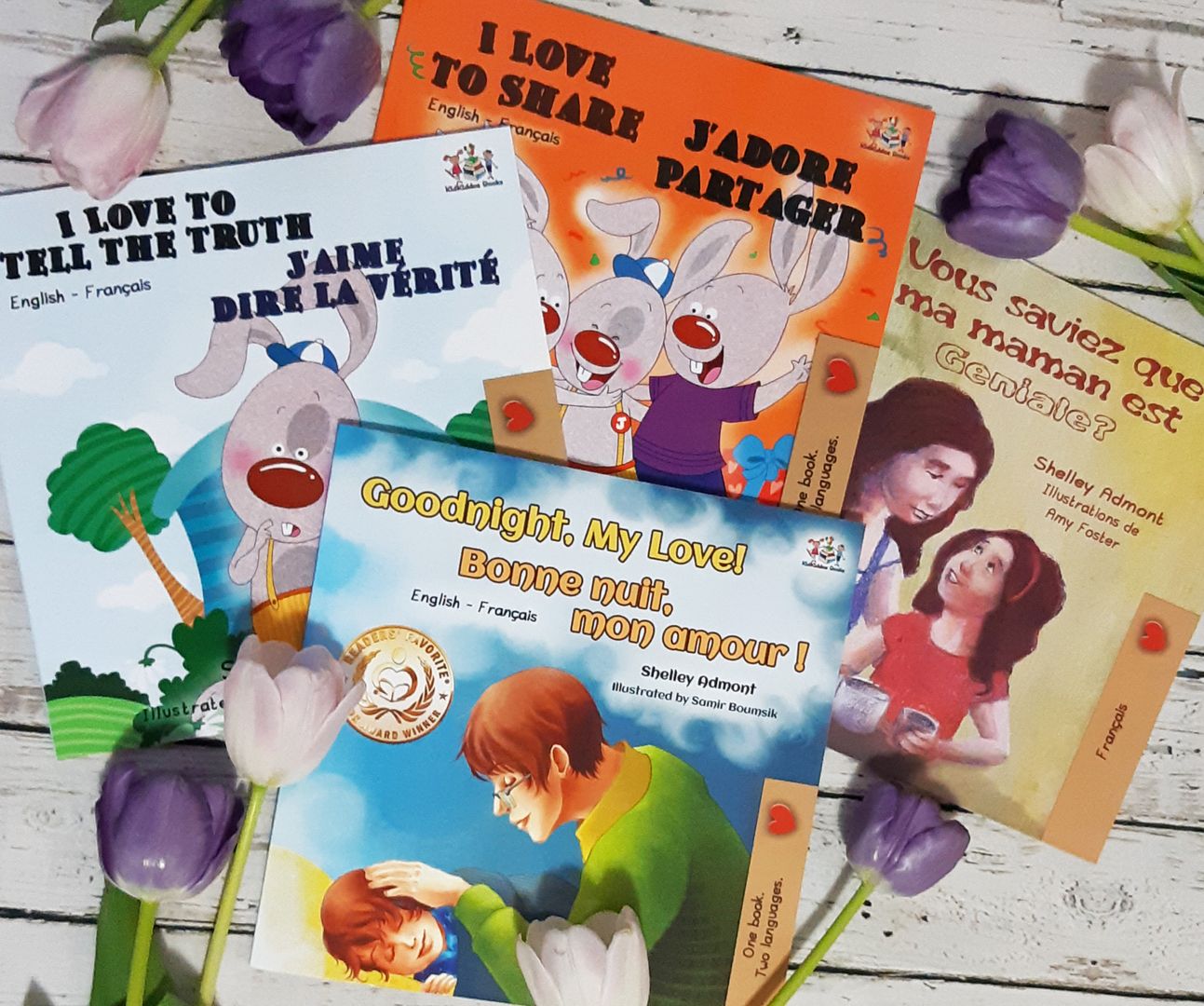
But to raise a bilingual baby is not an easy thing. There are so many things that you should do for your baby to learn the language as easily as possible. For instance, you should exactly know when to start and how to start. Or you should know what kind of bilingual book your kid will prefer to read. By the way, bilingual children’s books are one of the best ways to learn the language with your kid. Bilingual kid’s books can be different, you just need to know what exactly your kid will prefer. Let's check out what kind of things are important for raising a bilingual baby.
When to start
Infant bilingualism is distinguished, when the child speaks two languages ??at the same time (usually when the parents are speakers of different languages ??or the family speaks one language, but lives in a country where they speak another language), as well as children and adolescents bilingualism.
If you try to learn a second language at the same time as the first, it is on the one hand easier, on the other hand, more difficult. Although everyone knows that children are like sponges, absorbing everything around, learning a second language requires effort on their part.
It is best to learn a second language until the age of 5-7, when the child is already familiar with the basics of the language. The child has already developed a language (physiologically), and fine motor skills, memory, and attention. At this age of 5-7, bilinguals are likely to speak both languages without an accent. Higher chances of learning both languages equally well and speaking them fluently.
How much to do?
Research has found the figure of 25 hours per week to learn a second language. Language is understanding, speaking, writing and reading. When you are learning a second language, you don't have to forget or pass any of these dimensions, and this will be able to develop as your native language. Language is an open system. It is more like rock climbing or cleaning.
Books
This is maybe one of the most important things during becoming bilingual or to raise a bilingual baby. Why? Because books are the main thing to learn everything you want. We all started from books, didn't we? So bilingual children's books will be helpful for your plan to raise your baby. It works easily. First you read in your native language, second in the forign language. This will definitely help.
So, to raise bilingual kids is not that easy, but it's so interesting and teachfull. It is like your going into a new world and studying the new things for you and your baby. Learn new languages with your baby!
Strategies
- One parent, one language
- Time and place
- Home language
"One parent, one language" is the most common model of teaching a second language in mixed marriages. So, if the father speaks in one language, so this one language will be his language, and if the mother speaks a different language , then that difference will be “mother’s” language.
The second model is “time and place”.
The third model is "home language". The family moves to another country, a child is born and grows up in a different language environment. At home they speak in their native language, but on the street and at school they speak in that country language where they moved.