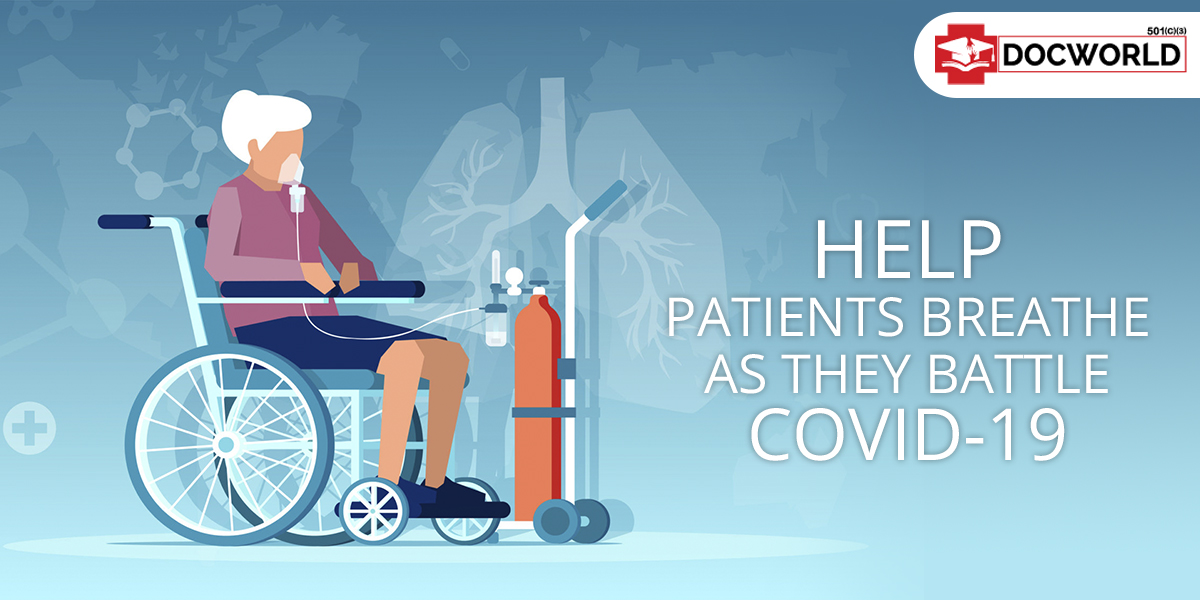
As the world battles the COVID-19 pandemic, people are joining forces to save those in need. Some people prefer to donate via websites accepting online COVID-19 donation in the USA, and some people prefer to buy equipment that might help COVID-19 patients and donate it personally. No matter whether you belong to which of these categories, you can help patients breathe as they battle COVID-19 by joining the DocWorld initiative to provide emergency oxygen concentrators. To know how they help and why they are so crucial, read on. We have explained everything below.
What is an Oxygen Concentrator?
COVID-19 has started to impact the lungs of the patients, and it harms their ability to breathe on their own. An oxygen concentrator is a device that can help individuals battling COVID-19 whose oxygen saturation levels are between 88 to 92. Using this device reduces the burden on a patient's lungs.
Can Oxygen Concentrators Be Used at Home?
One of the key things that makes an oxygen concentrator stand apart is that it can be operated at home. This benefit is not available when you use an oxygen cylinder.
When Does a Person Need an Oxygen Concentrator?
An oxygen concentrator is needed when the blood saturation levels are less than 94 percent. This number is crucial because if the blood saturation levels are less than this number, it's a sign of respiratory distress. In a normal scenario, this needs hospitalization, but hospital beds' unavailability in some Indian hospitals has restricted people to their homes.
How an Oxygen Concentrator Works?
If you are thinking of donating money for an oxygen concentrator or a bunch of them, you might want to know how they work. It is a simple device that takes in air, separates the oxygen, and ensures that it is delivered to a person via a nasal cannula. An oxygen concentrator should be connected to a source of electricity to work properly. It can deliver air that has up to 95 percent oxygen and ensure that the patients' lungs get some relief. If the supply of oxygen helps a person to recover and increases their blood saturation levels, the device can be removed (after consulting with a doctor) and shared with another patient who has low blood saturation levels.
An oxygen concentrator has two parts. The first is a compressor that squeezes the air in the atmosphere and adjusts the pressure at which the air is delivered to a person. The second is a sieve bed filter that's made of Zeolite (a material that separates nitrogen from oxygen). An oxygen concentrator has two sieve beds, and each of them works simultaneously to release oxygen into a tank that is connected to a cannula. They also release the separated nitrogen and keep working for as long as the device is switched on.
Which Oxygen Concentrators are Recommended for COVID-19 Patients?
If you want to help patients breathe as they battle COVID-19 disease, you should know that there are many oxygen concentrators available in the market, and they all have different oxygen outputs. For a COVID-19 patient who has breathing issues, a device that has 5L-10L output is recommended. It is essential to pick an oxygen concentrator that delivers air that is 90 percent pure oxygen.
The cost of such oxygen concentrators varies from about USD 550-1240 (INR 40,000-90,000). Most COVID-19 patients in India cannot afford this kind of purchase. It is the reason why donating oxygen concentrators is so essential in today's time. To donate one (or more), connect with the team of docworld.org and let them guide you. Or you can donate by simply visiting this link.