Before this method of paying for advertising on the Internet appeared, the CPM payment model was adopted by many marketing agencies. The price was calculated per 1000 impressions of an ad. At the same time, a significant part of the impressions was useless since it did not lead to a transition to the site and the client's involvement in the purchase. Pay per click allows you to achieve more efficiency at a lower cost of advertising.
Showing advertisements only to interested users is an innovative treatment of your advertising budget. Pay per click advertising is considered an effective marketing tool. Let's discuss what PPC advertising is, its features and its benefits. But, before we jump in, here is a little history and criticism of PPC marketing.
History
It is believed that the concept of PPC was invented by Bill Gross, the founder of Goto.com, which later became part of Yahoo! Later, this marketing method began to be applied in Google (AdWords) and Microsoft (AdCenter).
Criticism
Competitors can deliberately click on an advertising banner many times: the advertising budget will be spent, and genuine buyers will not come to the site.
PPC advertising, what is it in simple words:
Advertising is needed to sell goods and services. However, it costs money and requires defining the target audience. Show ads to everyone in a row - drain the budget. In addition, on a site where non-target users go, behavioural factors will worsen through an increased bounce rate (a person went in and immediately left).
Where are PPC ads hosted?
PPC ads are placed in search engines, on partner sites. Sometimes they can be found on social networks. The most popular PPC placement channel is search engines. Advertising should be visible to the user; therefore, PPC marketing is a whole range of works that a specialist performs before an ad is placed.
How much does contextual advertising cost?
PPC abbreviation stands for Pay Per Click, which literally means "pay per click". In contrast to the CPM (Cost per Mile) model, PPC is more transparent and efficient in sales. Regardless of how many people saw the ad, the advertiser pays only for the perfect clicks to the site.
The specificity of contextual advertising is that payment is made not for the number of impressions but each click on the ad. The necessary settings are made for advertising to work, and the account is replenished for the amount recommended by the PPC specialist.
Further, for each click, money is debited. The cost of a click depends on the settings, the niche of placement, the price of the keyword, etc. The specialist in charge of the project will tell you in detail about the costs of contextual advertising.
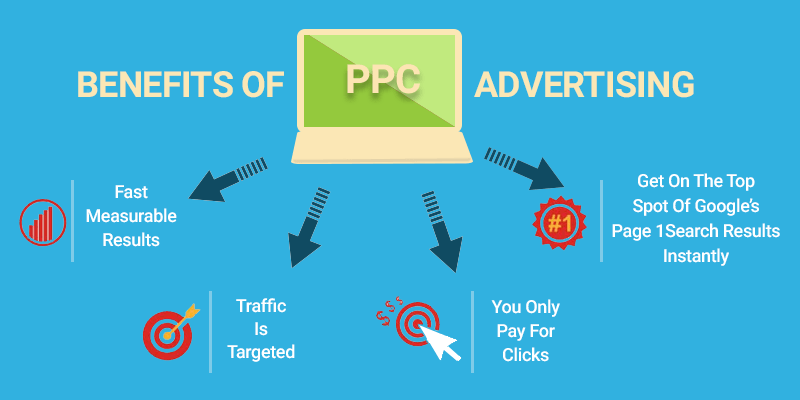
Benefits of PPC Advertising
The benefits of contextual advertising include:
- Versatility - PPC marketing is a tool that allows you to advertise any goods and services that are not prohibited by law.
- Payment for the result - You do not pay for impressions, and you pay for the transition to the site. What sales will be depends not only on advertising but also on the quality of your goods or services.
- Broad coverage - The programs allow the specialist to cover a wide range of keywords. This means that with the proper ad setup, you can get more traffic than your business competitors get.
- Flexibility - PPC advertising is a flexible system where you can change your ad, CPC or keywords at any time.
- Getting into the target audience - Ads are shown only to interested users.
With the proper settings and working with professionals, PPC advertising effectively increases sales and project popularity. But, at the same time, if you do not take it seriously enough, you can drain the budget literally in a day.