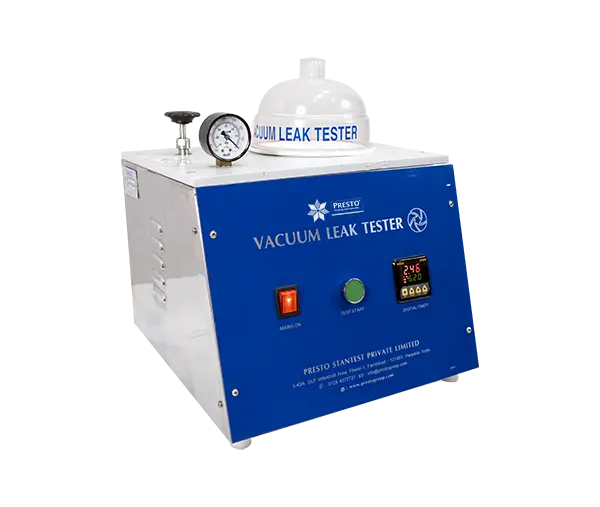
In all manufacturing sectors where product integrity and customer safety are critical, offering packaging that is not only airtight, but also defect-free, becomes a requirement, not just an aspect of product quality. Packaging is essential for product reliability and for maintaining freshness or sterility across food and beverage, or pharmaceuticals, and packaging's role must be maintained. Even minimal defects can lead to contamination and spoilage loss of vacuum, and all can negatively impact brand reputation, and customer satisfaction. At this point in time, the utility of an excellent vacuum leak tester is well-founded.
Choosing the appropriate testing equipment is immensely important, particularly for industries that are in growing markets like Kenya, which have increasingly strict quality assurance standards. An operating and accurately functioning leak testing system can easily lead to reduced production losses, compliance with international packaging standards, and an increase in overall consumer confidence.
The Importance of Leak Testing in Modern Packaging
Leak testing is one of the most effective non-destructive quality control methods used to verify the seal integrity of various packaging materials—be it pouches, bottles, or laminated films. The goal is to identify even the smallest leak that may not be visible to the naked eye but can have a major impact on the product’s shelf life and usability.
In the food industry, for instance, air or moisture ingress through microscopic leaks can accelerate bacterial growth or oxidation, leading to product spoilage. Similarly, in pharmaceutical packaging, the slightest breach can expose the contents to external contaminants, rendering them ineffective or unsafe.
By integrating advanced leak detection systems into production lines, manufacturers can detect potential issues early, reduce waste, and maintain high production efficiency. Moreover, consistent testing helps businesses comply with ISO, ASTM, and other international quality standards, which are critical for companies exporting products globally.
Challenges in Leak Detection
Leak detection may seem straightforward, but it involves several complexities. Different packaging materials respond differently to pressure, and the type of product—whether solid, liquid, or gas—also influences the testing parameters. Environmental factors like humidity, temperature, and air pressure variations can further affect test results if the equipment is not properly calibrated.
Additionally, traditional manual methods such as water bath testing or visual inspection often lack accuracy and repeatability. These outdated approaches may fail to detect micro-leaks, leading to false positives or missed defects. Therefore, investing in automated and precise leak detection equipment ensures that every package meets the desired standards of performance and safety.
Why Leak Testing is Essential for Quality Assurance
- Protects Product Integrity: Leak testing prevents contamination and ensures that the product remains fresh and stable throughout its shelf life.
- Ensures Regulatory Compliance: Many industries require leak testing as part of quality certification to meet national and international standards.
- Reduces Product Recalls: Detecting leaks early minimizes the risk of defective products reaching customers.
- Improves Production Efficiency: Modern equipment allows for faster, repeatable, and more accurate testing without damaging the product.
- Builds Brand Reputation: Consistent quality assurance leads to increased consumer trust and loyalty.
Choosing the Right Equipment for Leak Testing
When selecting a leak testing solution, businesses must consider several key factors to ensure accurate results and long-term reliability. These include:
- Test Sensitivity and Range: The equipment should be capable of detecting micro-level leaks to guarantee packaging integrity.
- Ease of Operation: User-friendly controls and automated functions reduce operator errors and improve testing efficiency.
- Material Compatibility: The tester should be adaptable to different types of packaging materials, such as flexible films, foil laminates, bottles, and jars.
- Repeatability and Accuracy: High precision ensures that every test result is consistent and reliable, even in varying production conditions.
- Maintenance and Calibration: Regular calibration and low-maintenance design help maintain long-term performance and reduce operational costs.
By evaluating these factors, manufacturers can choose a system that best fits their production needs and quality control standards.
Growing Demand for Leak Testing in Kenya
The manufacturing sector in Kenya is rapidly expanding, driven by increasing domestic consumption and export opportunities. Industries like food processing, dairy, beverages, pharmaceuticals, and chemicals are focusing heavily on improving their packaging quality to meet global market expectations.
As a result, the demand for reliable testing systems such as the vacuum leak tester in Kenya has risen significantly. Companies are realizing that investing in advanced leak detection technologies not only improves product safety but also reduces financial losses caused by product recalls, wastage, and non-compliance penalties.
Additionally, Kenya’s growing emphasis on sustainable manufacturing encourages businesses to adopt efficient and eco-friendly quality assurance practices. Leak testing supports this initiative by helping reduce defective packaging waste and optimizing material usage.
Benefits of Vacuum Leak Testing
Vacuum leak testing is a preferred method across industries due to its simplicity, accuracy, and non-destructive nature. By creating a controlled vacuum environment around the test sample, this technique can easily identify leaks through pressure decay or bubble formation. The process is highly repeatable and ideal for checking seals in flexible or rigid packaging.
This type of testing also helps evaluate the strength and consistency of seals, ensuring that packaging can withstand storage, shipping, and handling conditions. For manufacturers dealing with high-volume production, vacuum leak testing offers the reliability and speed required to maintain continuous quality assurance.
Why Choose Presto Instruments
When it comes to reliable and high-performance quality testing equipment, Presto Instruments has established itself as a trusted name in the global market. Known for their innovation and precision engineering, Presto provides a comprehensive range of testing instruments designed to meet the evolving needs of the packaging industry.
Their vacuum leak testers stand out for their robust design, user-friendly interface, and superior accuracy. Each unit is engineered with advanced digital controls, ensuring consistent performance and precise detection of even the smallest leaks. Whether used in laboratory settings or production lines, Presto’s equipment delivers repeatable results that comply with international testing standards.