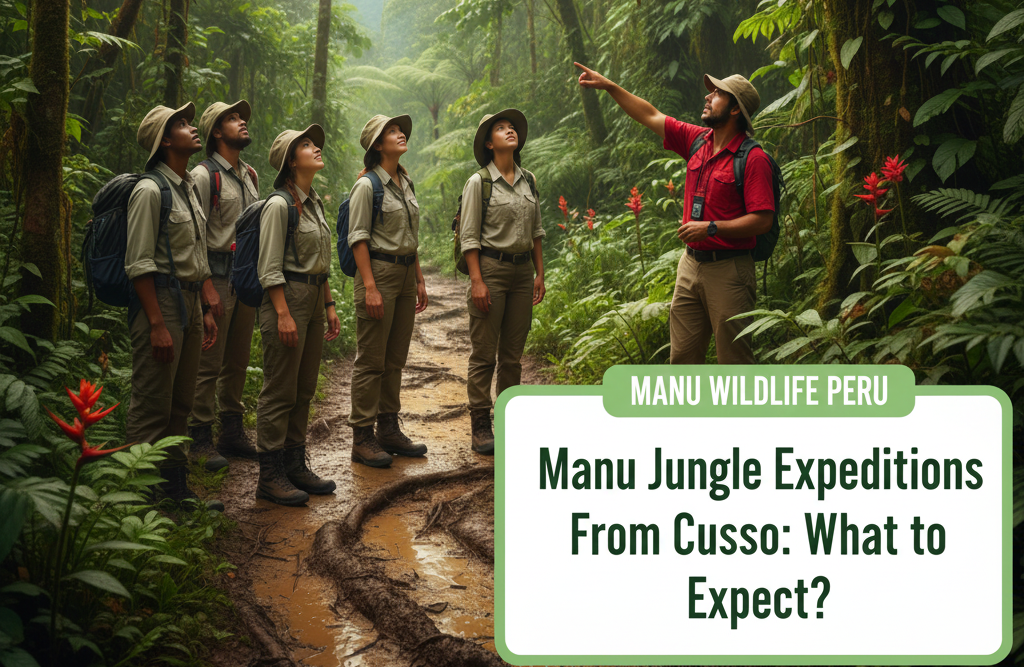
Manu is one of the best places to see nature in its pure state. It sits where the Andes mountains meet the Amazon jungle. The forests are deep, quiet, and full of life you won’t find anywhere else. A Manu expedition gives you more than photos. It gives you sound, scale, and a sense of how wild Peru still is.
About Manu Biosphere Reserve
The Manu Biosphere Reserve covers a huge protected zone in southeastern Peru. It includes mountain tops, misty cloud forest, and thick low jungle. The height change from mountains to jungle makes the weather, plants, and animal life shift fast. You can feel the temperature drop, see the trees change, and hear new birds within one road.
Most people start their Manu expeditions from Cusco. The road climbs high at first, then drops into green valleys, rivers, and rainforest. The access points lead to areas managed for tours, research, and forest protection. The deeper core zones remain untouched and off-limits. This keeps the wildlife safe. This keeps Manu rare.
Why Manu Tours Stand Out
Manu Biosphere Reserve tours combine road travel, river boat rides, and jungle walks. Few places pack this range into one trip. In a single expedition, you can watch the sun rise over mountain fog, hike trails above clouds, and float rivers at tree level. The scale makes every day feel like a new place.
The reserve supports many forms of life because the land changes so fast. This makes Manu tours a top choice for bird watchers, wild life fans, and people who want forests without heavy crowds. You get silence between animal calls, not loud tour lines.
Manu Wildlife You Can See
Manu is known for high bird numbers, monkey groups, big cats, river animals, forest insects, and night life. A Manu expedition puts you in the right place at the right time for these sightings. You stand back, stay quiet, and watch them act like you’re not there. This makes the moments real, not staged.
Macaws and parrots fly early in the morning toward clay cliffs. They land in groups, then wait before feeding on clay. This clay gives them key minerals they can’t find in seeds alone. The wait, the flock size, and the colors make this a highlight on most Manu Biosphere Reserve tours.
Monkey species change by altitude. In cloud forest, you see smaller, quick-moving groups that stay high in the trees. In low jungle, you find louder troops that cross canopies and chase fruit. Each group has its own tone, social cues, and movement style.
River life adds a new layer. You may see giant river otters swim in family packs, break water with fast bubbles, or roll near shore with fish in their mouths. Caimans rest near river bends at night, eyes glowing in your flashlight beam. Capybaras sit low near muddy banks at dusk, calm until they slip away.
Cats like jaguars and ocelots move in deeper zones, most active at night or dawn. Even if you don’t see them, you see their signs. Paw marks near sand banks. Scratches on soft tree bark. Quiet shifts in bird alarm calls. Manu teaches you to read forest talk, not just spot animals.
What a Manu Expedition Feels Like
A Manu expedition moves slowly. Not rushed. Not loud. You ride, stop, watch, then move. The wildlife sets the pace. The guides read the forest before you do. They know when to cut the motor, when to wait, and when to scan tree lines.
You hear scarlet macaws long before you see them. The calls echo, thick and loud. You smell wet earth after short rainfall. You see mist hang low in the cloud forest, covering the road in thin white sheets. You feel mud stick under boots, firm but soft. You eat meals in open lodges under bird calls, not traffic. Manu doesn’t feel polished. It feels alive.
Lodges range from basic jungle cabins to tree-top stays in private reserves. The best stay is to keep lights low at night to respect animal behavior. The lack of light brings sound forward. Insects buzz deep like static. Frogs pulse calls like low drums. Forest owls cut the air with sharp notes. Night walks feel full, heavy, not scary. It’s nature doing its job.
The Route Most Manu Tours Follow
Manu Biosphere Reserve tours often begin with a drive from Cusco. The first day crosses high puna grasslands and deep cloud forest. The next days drop toward cultural and buffer zones, then into low jungle near Manu River and Madre de Dios.
Boat days mix long quiet float time with short stops. Jungle walk days mix early starts, day trails, night walks, and animal tracking lessons. The river is your road for the deeper half of the trip. The forest stays on your roof.
Who Should Go on a Manu Expedition
People who like heavy crowds won’t love Manu. People who like wildlife that ignores you will. Bird watchers get long species lists. Photographers get clear shots with patience. Forest fans get quiet trails. If you want an untouched jungle with trained guides, Manu is your best call.
Best Time to Travel to Manu
Most Manu expeditions run in Peru’s dry season from May to October. The trails are easier. River levels stay steady. Mountain fog still comes, but roads move faster. Rain months like January and February make the forest thick, green, and animals active. If you like a wet jungle feel and don’t mind rain, go in early months. If you want easy trails, go mid-year.
Final Word
Manu Biosphere Reserve tours let you see forests and animals without constant noise around you. They ask for respect, patience, and quiet. The forest pays you back fast if you give that respect. You leave not just with photos. You leave with the memory of an older, calmer nature.
If you want a Peru jungle trip that feels real, plan a Manu expedition. It’s the clearest way to see wild Peru in one ride, one river, one forest