Introduction
Spend enough time around marinas and boat ramps and you'll notice something Suzuki outboard engines tend to attract a loyal, vocal following. Boaters who run Suzuki often stick with it. But for someone shopping for their first outboard or considering a switch, the question is fair: what actually sets Suzuki apart from Yamaha, Mercury, Honda, and the rest of the field? This piece breaks it down honestly.
Suzuki's Engineering Philosophy
Suzuki Marine has been building outboard engines since 1965, and that history shows in the engineering priorities the company has maintained. Suzuki has consistently emphasized lean-burn combustion technology, low-emission performance, and fuel efficiency as core design pillars not as afterthoughts. This focus predates the industry-wide push toward fuel economy and has given Suzuki a genuine technical foundation rather than a marketing position.
Lean Burn and Offset Driveshaft Technology
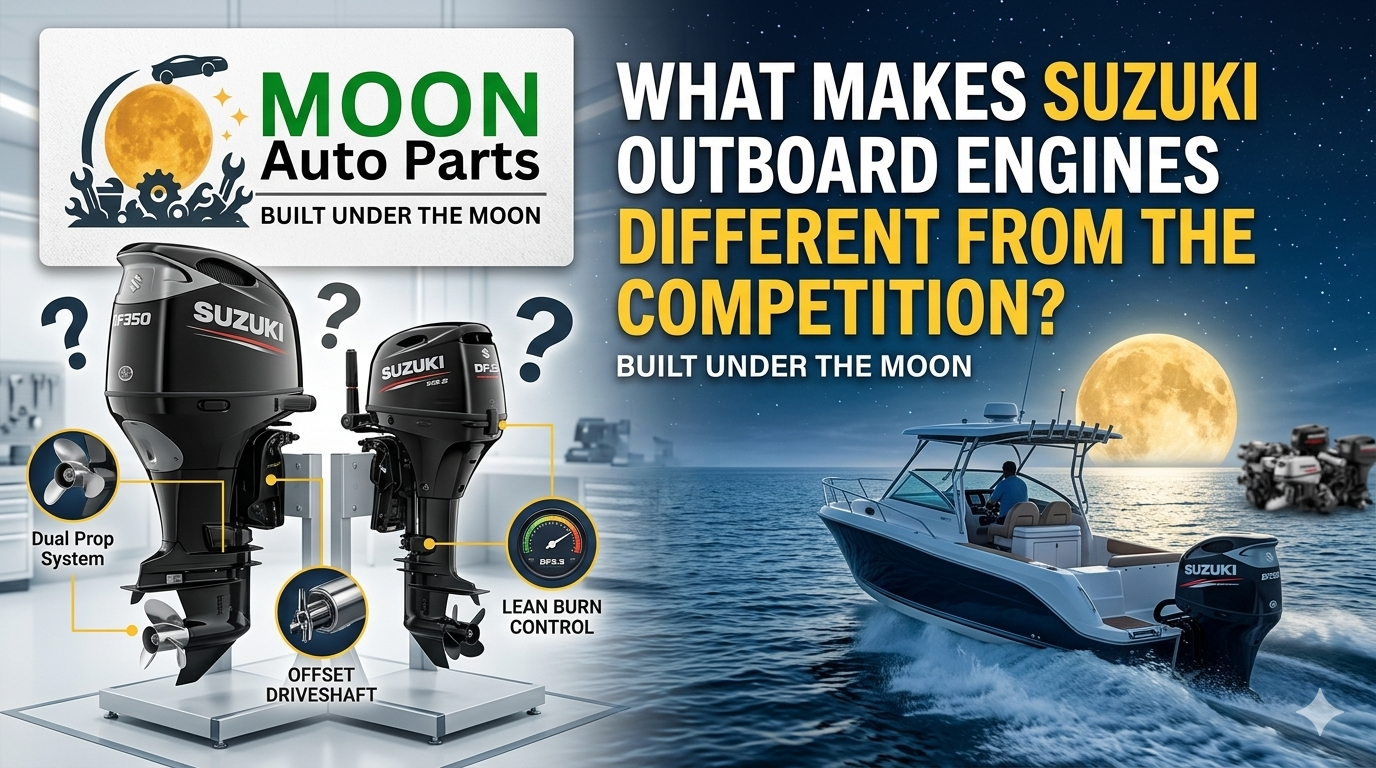
Two technologies in particular differentiate Suzuki from much of the competition. The first is Suzuki's lean burn fuel control system, which adjusts the air-fuel mixture in real time based on engine load and RPM. At cruising speeds where boats spend most of their time the engine runs leaner than it would under full load, reducing fuel consumption without sacrificing performance. The second is Suzuki's offset driveshaft design, used in several mid-range and larger models. By offsetting the crankshaft from the driveshaft, Suzuki engineers were able to lower the engine's center of gravity and reduce overall engine height. This makes installation cleaner on a wider variety of transom configurations.
The Lineup Portable to Large-Displacement
Suzuki's outboard range runs from compact 2.5 horsepower portable units suited to dinghies and small aluminum boats all the way up to the DF350A a 350-horsepower V6 designed for serious performance applications. The mid-range DF70A through DF140A family is particularly popular with fishing boat owners who want a reliable, fuel-efficient four-stroke without paying premium prices for top-of-market alternatives. The DF115 and DF140 models have earned particularly strong reputations for their balance of performance, economy, and long-term reliability in both recreational and light commercial applications.
Reliability and Maintenance Profile
Suzuki outboards have a strong track record for longevity when properly maintained. The recommended service intervals are comparable to other major brands, with annual 100-hour service checks covering spark plugs, fuel filters, impeller inspection, and gearcase oil changes. Suzuki's use of multi-point sequential fuel injection across much of the lineup helps keep combustion chambers cleaner over time, which contributes to long-term engine health.
Dealer Network and Parts Availability
One legitimate consideration when choosing Suzuki is dealer network density. In coastal areas and regions with active boating communities, Suzuki Marine dealers are well-represented. In more rural or inland markets, service centers may be fewer than those available for Yamaha or Mercury. This is worth researching before committing, particularly if you'll be operating the engine far from populated coastal areas.
Suzuki vs. The Competitor
Against Yamaha, Suzuki often wins on initial purchase price for comparable horsepower. Against Honda another fuel-efficiency-focused brand Suzuki typically offers more power density per dollar. Against Mercury, the comparison depends heavily on the application: Mercury's Verado and V8 lines are performance-oriented in a way that Suzuki's top-end products approach but don't quite match. Where Suzuki genuinely excels is in the practical middle ground: reliable, fuel-efficient four-stroke engines in the 60 to 175 horsepower range that deliver consistent performance at competitive prices.
Frequently Asked Questions
How long do Suzuki outboard engines typically last?
With proper maintenance, Suzuki four-stroke outboards can reliably exceed 2,000 hours of operation. Many well-maintained examples in commercial applications have logged considerably more.
Are Suzuki outboard engines good for saltwater use?
Yes. Suzuki's corrosion-resistant components and protective coatings make them well-suited for saltwater environments. Standard flushing protocols after saltwater use are still essential to maximize longevity.
How does Suzuki's fuel consumption compare to Yamaha and Honda?
Suzuki's lean burn technology puts its fuel consumption figures in a competitive range with Honda and ahead of many Mercury models in real-world cruising conditions, though exact comparisons depend on model, hull type, and load.
What oil should I use in a Suzuki outboard engine?
Suzuki recommends its own Suzuki Marine Engine Oil or an equivalent API-rated FC-W four-stroke marine engine oil. Always consult your specific model's owner manual for viscosity recommendations.
Can I use a Suzuki outboard engine in freshwater lakes?
Absolutely. Suzuki outboards perform well in freshwater environments and are popular among lake anglers and freshwater recreational boaters worldwide.
Read more - Are Porsche Engines With Warranty Actually Worth the Cost?