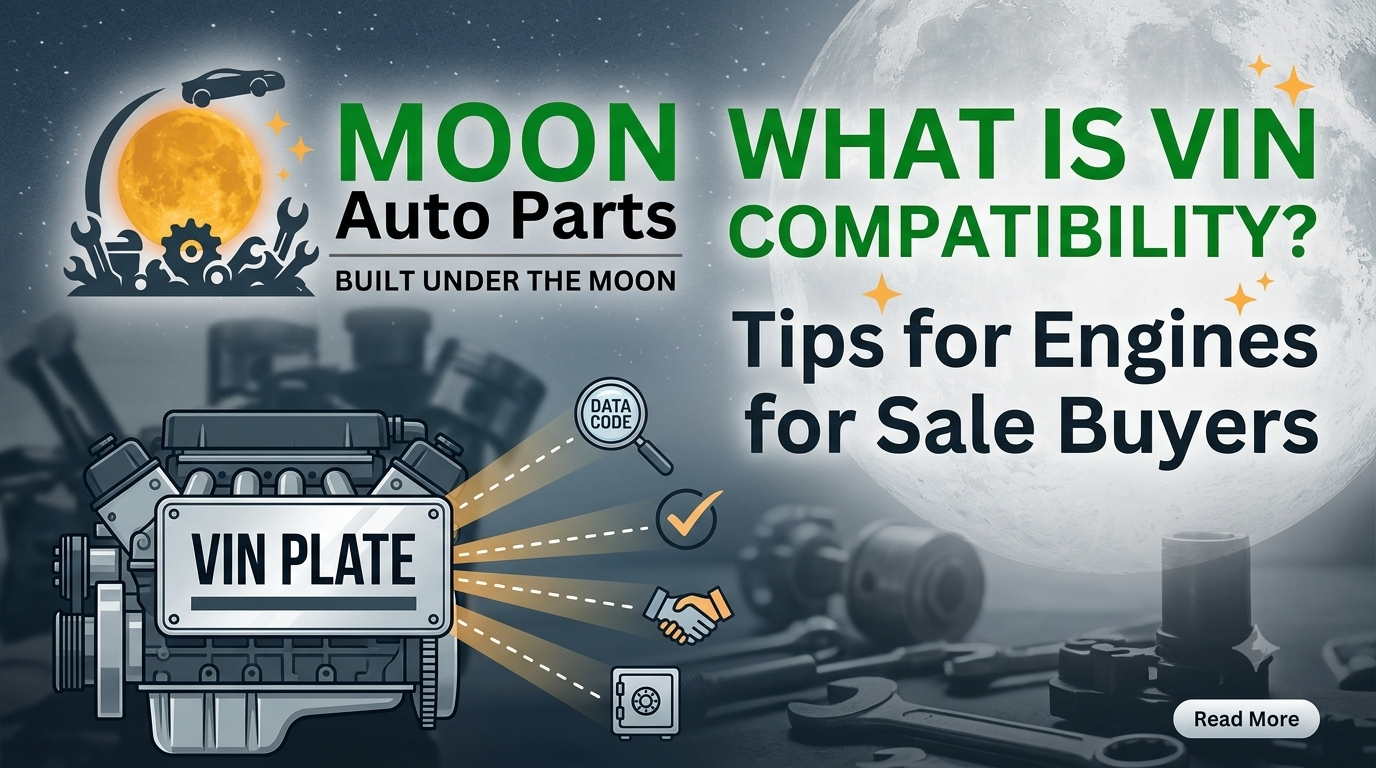
When shopping for engines for sale, the single most important step is confirming that the engine you choose actually matches your vehicle's specifications. Skipping this step is the most common reason buyers end up with parts that don't fit, don't bolt up correctly, or trigger check-engine codes after installation. Fortunately, your Vehicle Identification Number (VIN) holds nearly all the information a seller needs to verify compatibility before you spend a dollar.
Why the VIN Matters When Browsing Engines for Sale
Your 17-digit VIN encodes the make, model, year, trim, and critically the original engine code your vehicle left the factory with. Many vehicles were built with multiple engine options in the same model year, so two cars that look identical on the outside may require completely different replacement engines. Reputable sellers of engines for sale will ask for your VIN before quoting a price, because it lets them cross-reference their inventory against your exact build.
Step-by-Step VIN Compatibility Checklist
- Locate your VIN on the dashboard (driver's side, visible through the windshield), the driver's door jamb sticker, or your registration and insurance documents.
- Decode the 8th digit of the VIN, which typically identifies the original engine type—use a free online VIN decoder if you're unsure how to read it.
- Provide the full VIN to the seller and ask them to confirm the engine displacement, configuration, and emissions equipment match your vehicle.
- Compare the engine's casting numbers, sensor locations, and wiring harness connectors against your current engine, especially for vehicles with multiple model years sharing a platform.
- Ask whether the replacement includes accessories like the intake manifold, sensors, and mounts that may differ between trims even with the same base engine code.
Common Mistakes Buyers Make
A frequent error is assuming that because two vehicles share a model name, their engines are interchangeable. Mid-cycle redesigns, regional emissions variations, and optional engine packages can all create incompatibilities that aren't obvious from a visual inspection alone. Another mistake is relying solely on the engine size (for example, assuming all 2.5-liter engines are identical) without checking the specific engine code, which can vary significantly in internal components, bolt patterns, and electronics.
Working with Sellers to Confirm Fit
The best dealers specializing in engines for sale maintain detailed cross-reference databases tied to VIN ranges and engine codes, so don't hesitate to ask pointed questions. Request photos of the engine's identification tag, ask whether the unit was pulled from a vehicle with a matching VIN prefix, and get any compatibility claims in writing as part of your purchase agreement. A seller who hesitates to provide this information or pressures you to buy without verification should raise a red flag.
Final Thoughts
Taking a few extra minutes to verify VIN-based compatibility before purchasing engines for sale can save you from costly returns, shipping fees, and installation labor on a part that ultimately doesn't fit. Treat your VIN as the master key to compatibility, and insist that any seller you work with uses it to confirm the match before the sale is finalized.
Read more - Are Salvage Yard Engine Prices Getting Too Expensive?