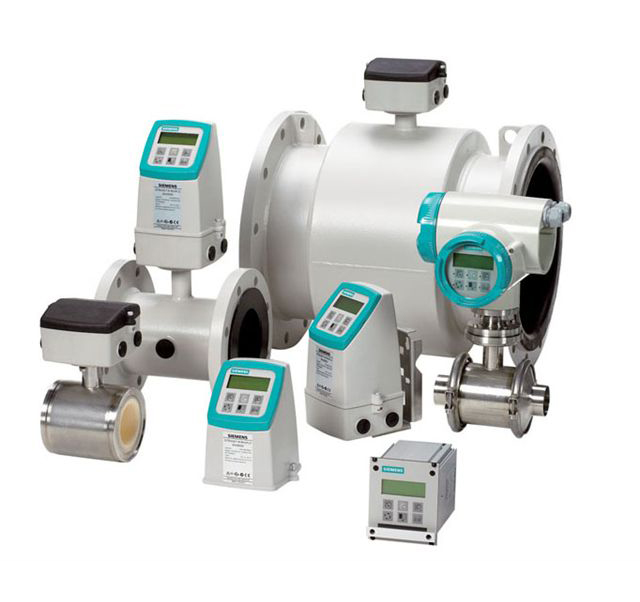
A mechanical flow meter is a type of flow meter that measures the flow using an arrangement of various moving parts. The fluid is likely to pass through the rotating turbine, piston, or even on some series of gear or chambers. The working principle of mechanical flow meters depends on the displacement and rotation of various mechanical parts to measure various flow rates.
The working principle of a mechanical flow meter always differs from that of the ultrasonic and electromagnetic.
With a mechanical flow meter, you can easily monitor the flow rates of water, viscous liquids, fuels, etc.
A non-mechanical flow meter, on the other hand, uses an electrode sensor to calculate the flow rate of substances. It does this by measuring the induced voltage and converting the measurement into flow rate.
???????Many people like using non-mechanical flowmeters because they can last for a longer period, and they also require. It is because they don't have any moving parts which can be subjected to breakage.
Types of mechanical flowmeters
There are different types of mechanical flow meters available in the market. They include;
Variable area flowmeters
It is a type of mechanical flow meter that is best for controlling the volume flow rate of liquids and gases. Flowmeter works under the principle of float position measurement, and it is sometimes known as the Rotameter.
Its working principle entails the movement of fluids through the annulus, which the cone forms and floats from down to up. The differential pressure given out at the lower or upper float ends forms a force to increase the float level. The float usually stays stable at a specific height until the rising force is the same as the float weight which you have placed in the fluid.
Positive displacement flow meter
The positive displacement flow meter is a popular mechanical flow meter, which measures the volume flow rate. This flow meter is suitable in applications where there are corrosive and high viscous fluids.
It uses the mechanical measuring components to separate the fluids into single and known volumes continuously. It then fills and discharges the fluid volume to collect the total amount of fluids.
Turbine flow meters
Turbine flow meters are sometimes known as impeller flow meters. They are usually suitable for measuring the collective flow of gases and liquids. It starts its operation with a fluid moving through the sensor housing. It is because the impeller blades usually have a specific angle with the direction of the flow.
The fluid's impulse leads to the rotation of the blades. You will then measure the rotational speed, which is proportional to the flow rate speed.
Gear flowmeters
It is a type of mechanical flow meter known as a micro digital positive displacement flow meter. You can use it in measuring very small flow rates and small volume quantities of liquids, and it is usually resistant to low and high temperatures.
The movement of the fluid substance makes the gear rotate, and it will then form a pressure difference at both ends of the inlet and outlet of the device due to the fluid flow action.
Applications of non-mechanical flowmeters
Non-Mechanical flow meters are essential in applications where;
- It would be best if you had a high accuracy level.
- The media you are measuring have debris that may lead to clogging formation in a mechanical meter.
Applications of mechanical flowmeters
You can always use mechanical flow meters in applications where;
- There is a variation in the media temperature.
- You want to monitor the flow of oil, diesel, and other magnetic materials.
Wrapping up
A non-mechanical and a mechanical flow meter are essential devices in various industrial operations. They help in measuring the flow rate using various moving parts. For the non-mechanical, it usually has electrodes to help in the system of measurement. Your application, however, will determine which one to use between non-mechanical and mechanical flow meters.